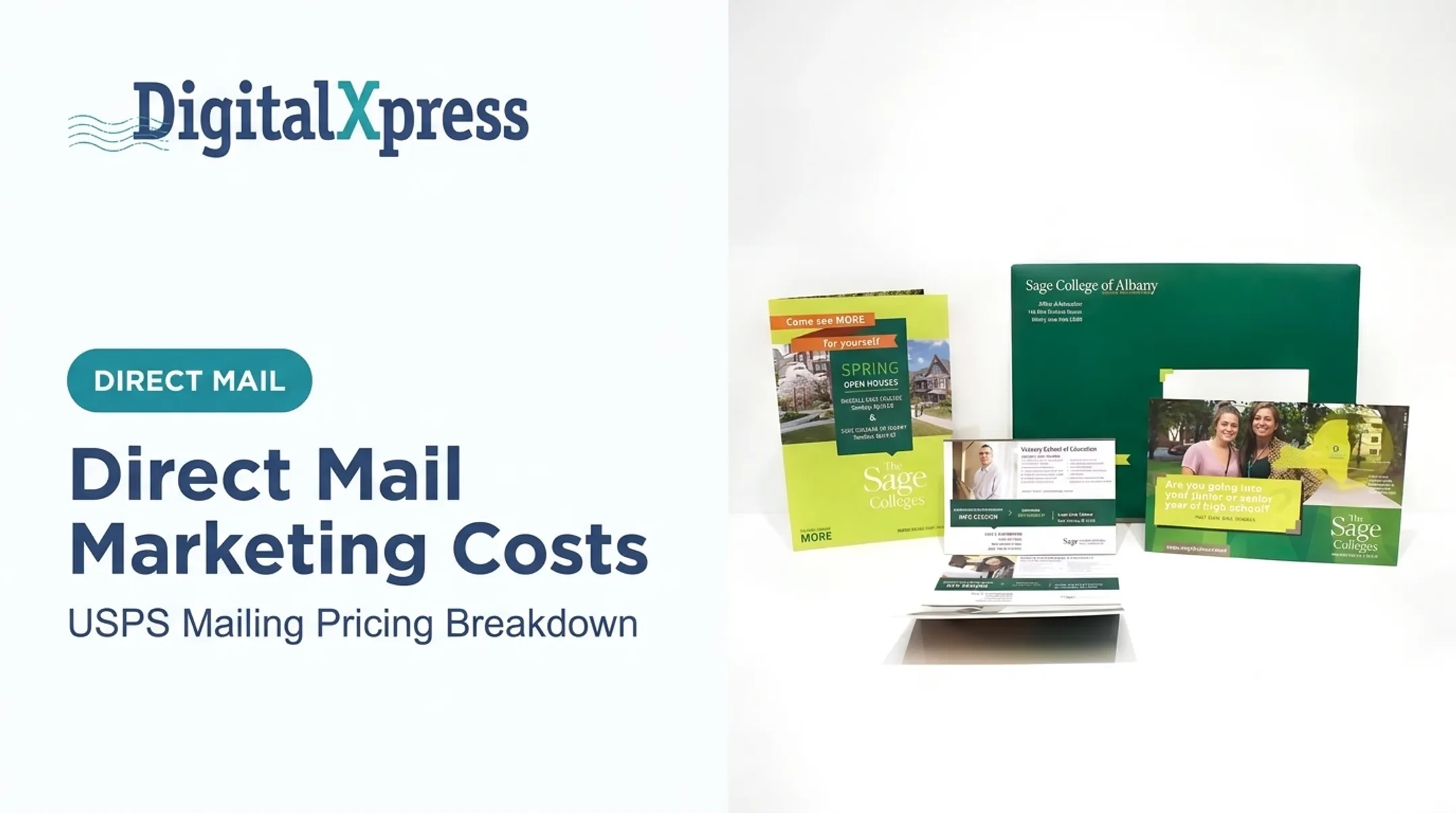
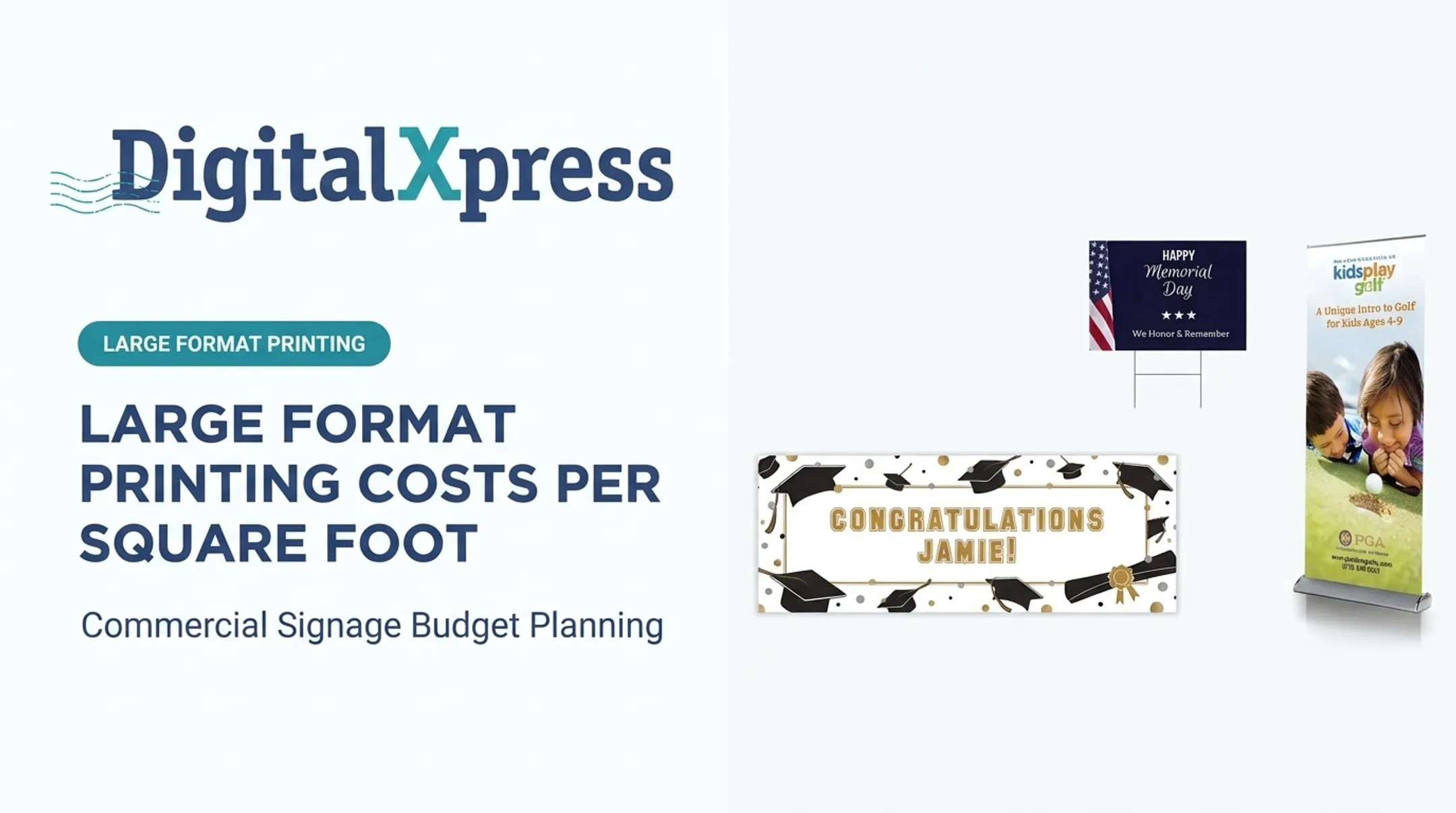
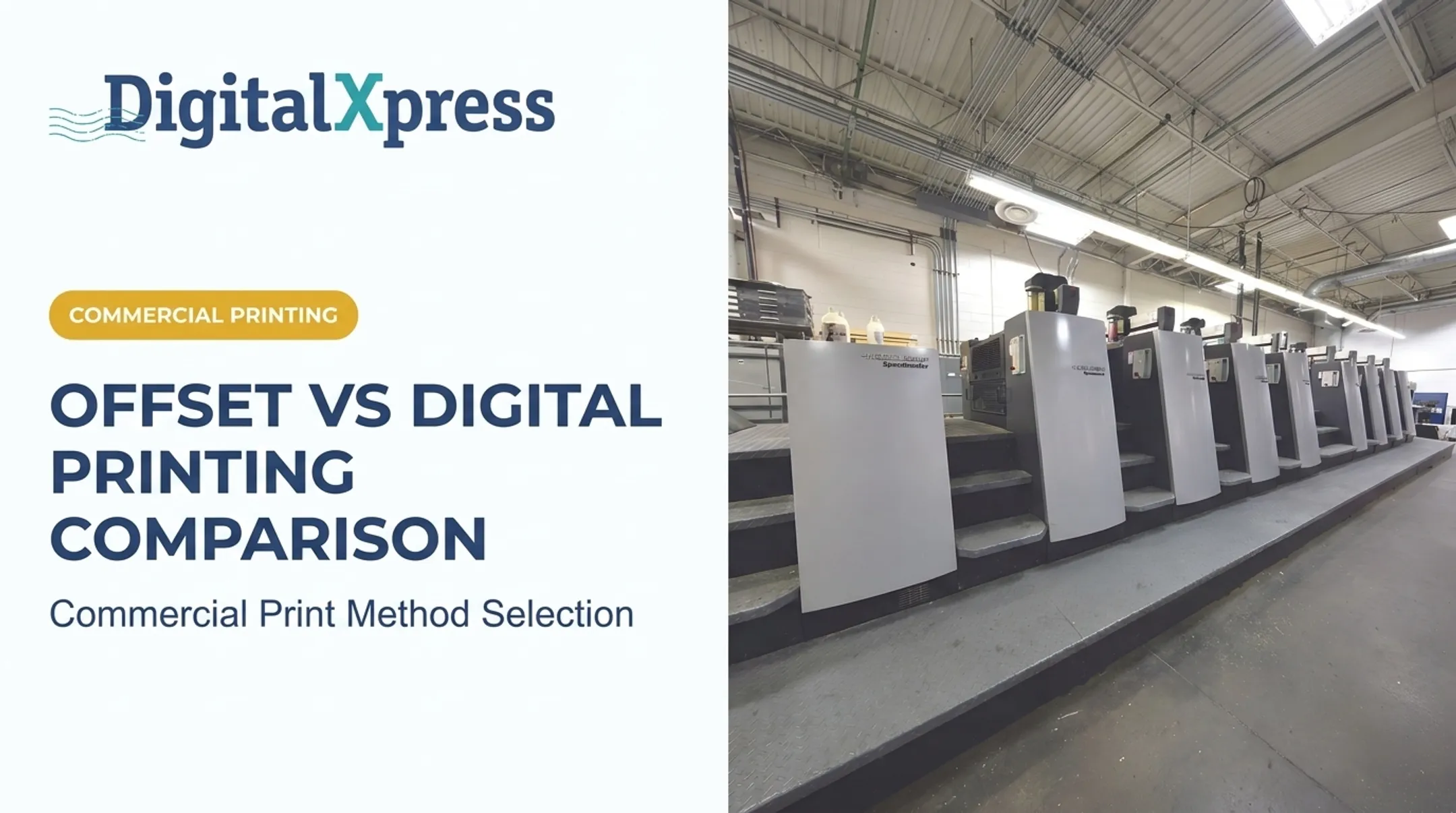
What does "digital printing cost" even mean? It could refer to the cost per page, the price for each finished piece, or the total for an entire direct mail campaign. To budget effectively, you first have to define the unit you’re pricing. This guide will walk you through the key factors that shape a digital printing quote, helping you compare estimates, avoid hidden fees, and set a realistic budget for your next project.
Key Takeaways
- A digital printing quote is a blend of quantity, finished size, paper, color coverage, finishing, and optional services like mailing.
- Digital printing excels at small quantities and short-run jobs, as it requires less setup and easily supports reprints and variable data.
- While larger quantities often lower the unit cost, the best process depends on the job; it's wise to research the digital-versus-offset crossover point.
- The lowest quote isn’t always the lowest total cost. Compare what’s included for prepress, proofs, finishing, delivery, and postage.
How Much Does Digital Printing Cost? (Pricing Overview)
There is no universal price list for digital printing. The cost of a simple one-page flyer is calculated differently than a multi-page book, a personalized direct mail piece, or a large format poster. Each project has unique production requirements that directly influence the final price.
Misunderstanding these variables often leads to predictable problems. You might underbudget because your initial estimate covered printing but not essential extras like finishing, shipping, or postage.
You might also compare a per-impression quote with a per-piece quote and assume they measure the same thing. Common pricing tiers make those differences easier to spot before you commit budget.
Digital Printing Price Examples
Because every job is custom, dated price sheets are rare. Composite print-and-mail examples from USPS Delivers (2025) still give a useful sense of all-in costs:
- 500 full-color postcards via First-Class Mail: around $294
- 6,000 postcards via Marketing Mail: under $4,000
Those totals include printing and postage, so the gap reflects volume, mail class, and production scope—not print price alone.

Understanding Pricing Tiers
Digital printing projects generally fall into three categories, each with different cost implications.
Basic Short-Run Digital Printing
This tier is perfect for simple, quick-turnaround jobs.
- Typical Products: Flyers, postcards, internal documents, simple brochures.
- Specifications: Standard sizes (like 8.5" x 11" or 4" x 6"), common house paper stocks, and limited finishing (such as basic trimming).
- Best For: Small businesses, individuals, or anyone needing small quantities without complex features.
Standard Commercial Digital Printing
This is the sweet spot for most marketing collateral.
- Typical Products: High-quality brochures, newsletters, marketing mailers, and event programs.
- Specifications: Higher quantities, printing on both sides (duplex), upgraded paper stocks, and common finishing like folding or booklet-making.
- Best For: Businesses needing professional-grade materials for marketing campaigns, sales support, or corporate communications.
Complex or Premium Digital Printing
These projects require custom quoting due to their specialized nature.
- Typical Products: Books, catalogs with heavy ink coverage, pieces on specialty materials, and personalized direct mail campaigns.
- Specifications: Variable data printing (VDP), heavy finishing (die-cutting, special coatings), tight deadlines, or integrated mailing; we may also add metallic inks, custom die-cuts, or scented inks by run size.
- Best For: Projects where presentation is critical, such as premium branding, regulated communications, or high-impact personalized marketing.
A rough online calculator only gives a ballpark figure. A production-ready quote is built from detailed specs: flat and finished size, page count, ink type, and bleed requirements.
Key Factors That Affect Digital Printing Cost
A digital printing quote isn't just about the number of pages. It reflects technical specifications, materials, labor, and production time. Here are the core factors that drive the final price.
Type of Product and Printing Process
Different products take different paths through production. A simple flyer only needs to be printed and trimmed. A booklet also requires folding, collating, and binding—extra labor and machine time that raise the cost.

For many projects, the choice also comes down to digital versus offset:
- Digital — Best for short runs, on-demand reprints, versioned jobs, and variable-data personalization, with minimal setup and strong cost efficiency at smaller quantities
- Offset — Better for very large, static runs where cost per piece drops sharply after plate-making setup
There is no universal crossover quantity where offset automatically becomes cheaper. An August 2023 analysis from WhatTheyThink explains that the breakeven point depends on the specific equipment, ink, paper, and job requirements. The best way to know is to ask your printer for a job-specific analysis.
Quantity and Total Printed Sides
Quantity is a major cost driver. Higher volumes spread fixed setup costs over more pieces, reducing the price per unit. Digital printing also carries a variable cost for each impression (one sheet passing through the press).
Key terms:
- Sheet — one piece of paper run through the press
- Side — one face of a sheet
- Impression — one press cycle printing one side of one sheet (a duplex postcard needs two)
- Piece — the finished product delivered to you
Size, Format, and Imposition
The finished size of your piece impacts how many fit on a large press sheet—a process called imposition.
- Standard sizes (8.5" × 11", 5.5" × 8.5") usually cost less because they nest efficiently and cut waste
- Custom sizes and die-cut shapes stand out but can increase paper use and need special finishing
Color Coverage and File Complexity
Heavy ink coverage—such as a solid background or full-bleed photo—uses more ink and may need longer drying time. That shows up in both materials and press time.
Files that need extra prep also affect price. Our variable data jobs need:
- A print-ready layout (for example, Adobe InDesign)
- A clean database (.csv or .xlsx)
- Clear merge rules linking fields to the design
Paper, Substrate, and Sustainability Requirements
Paper is a significant portion of the cost. Key variables include:
- Weight — cover stock costs more than text weight
- Finish — coated (gloss, satin, matte) vs. uncoated, with different price points and availability
- Specialty substrates — synthetics, textured stocks, and other non-standard materials cost more than plain paper
- Sustainability — FSC® Certified or recycled-content sheets are quoted as a spec; we are an FSC® Certified facility and can supply those options
A Q4 2024–Q1 2025 market report from Taylor Corporation noted that uncoated demand and prices were rising while coated prices held steady.
Finishing, Turnaround, and Delivery
What happens after printing can change the price as much as the press run.
- Finishing — trim, fold, score, laminate, bind, and die-cut each add labor and machine time
- Turnaround — rush work costs more; with us, simple jobs often run 5–7 business days and complex finishing jobs about 7–14
- Delivery — single-ship, multi-destination splits, and direct-mail drops each price differently
A 2021 WhatTheyThink survey found that 54% of print jobs were lost when a provider lacked the required finishing capability—so confirm bindery options before you lock the quote.
Digital Printing Cost Breakdown
To accurately compare quotes, you need to look at an itemized estimate. The total project cost goes far beyond the price per impression. Here’s how the costs break down.
Initial Print Production
This is the core printing cost and is primarily variable by quantity. It should clearly state the number of printed sides, color process (such as CMYK), quantity, finished size, and the paper or substrate being used.
Prepress, Design, and Proofing
These are typically one-time charges, though they can recur if you make revisions.
- File Checks: Confirming supplied files are print-ready. High-resolution CMYK PDFs with bleed and crop marks are preferred; Canva exports may need extra prepress work.
- Design Services: A separate line item when you need creative help. Our in-house team handles work from brochures to reports.
- Proofing: A hard-copy or digital proof ensures everything is correct before the full run. This is a critical step to avoid costly mistakes.
Finishing and Fulfillment
These costs vary with quantity and the specific operations needed. Instead of assuming they are included, look for itemized charges for services like:
- Cutting and trimming
- Folding, scoring, or perforating
- Binding (stitching, perfect binding, etc.)
- Laminating or coating
- Kitting and assembly
Mailing, Postage, Delivery, and Taxes
For direct mail, these costs are often as much as or more than the printing itself.
- Mail Prep: This includes list processing, inkjet addressing, and sorting to USPS specifications.
- Postage: The amount paid to the USPS for delivery. Proposed July 2025 commercial First-Class postcard rates range from $0.420 to $0.468, depending on sortation.
- Postage optimization: Our on-site USPS clerk helps clients lower rates and capture 3% to 6% incentives in the 2025 USPS Promotions Program.
- Delivery + Taxes: Freight costs for shipping to your location and any applicable sales tax should also be listed.
Maintenance, Reprints, and Version Changes
Consider the total lifecycle cost. On-demand digital printing helps minimize waste from outdated inventory. Small artwork changes and short reprints are usually more efficient on digital as well.
We can manage creative, print, mailing, and large format production under one roof. Still, confirm which services appear on each quote so side-by-side comparisons stay accurate.
Low-Cost vs. High-Cost Digital Printing and How to Set a Budget
The terms "low cost" and "high cost" are relative. A cheap flyer that falls apart is no bargain, while a premium book that lasts for years can be a great value. The right price depends on your project’s purpose, quality expectations, and timeline.
Lower-Cost Digital Printing
These projects prioritize economy and speed.
- Standard formats and readily available paper stocks
- Straightforward color with simple finishing
- Print-ready files and flexible deadlines
They fit internal documents, routine marketing collateral, short-term promotions, and test campaigns where premium durability is not the main goal.
Higher-Cost Digital Printing
These projects invest in features that enhance impact, durability, or personalization.
- Specialty stocks, heavy ink coverage, or large formats
- Variable data, complex binding, or rush production
- Secure handling for regulated communications, including SOC 2®-compliant workflows
That mix shows up in premium work such as multi-page annual reports we produce, or a 50,000-piece personalized direct mail run. Choose this tier when presentation and consistency matter most—keepsake books, durable signage, and high-visibility campaigns.
Practical Budgeting Checklist
To get an accurate quote, you need to provide clear specifications. Before you request pricing, define these key details:
- Use case: What is the project for, and who is the audience?
- Quantity: How many finished pieces do you need?
- Dimensions: What are the flat and finished sizes?
- Printed sides: One-sided or two-sided?
- Paper: Weight, finish, and stock type
- Color: Full color, black and white, or specific brand colors?
- Finishing: Binding, folding, coating, or other finishing
- File status: Do you have a print-ready PDF?
- Deadline: When do you need finished pieces?
- Delivery: Where should the order ship?
- Mailing needs: Addressing, sorting, and mailing required?
Many buyers still miss cost drivers outside the unit price:
- Inventory left over after a short campaign
- Postage and mailing preparation
- Quotes that omit finishing, delivery, or data handling
Request itemized quotes, then ask which specs you can adjust to hit budget without weakening the project’s core purpose.

When you need coordinated creative, production, and mailing support, talk with us at Digital XPress. With more than 35 years in print and mail, we can build a project-specific, itemized estimate around your specs and timeline.
Conclusion
Digital printing cost isn’t a single number on a rate card. It’s a dynamic figure shaped by quantity, format, materials, finishing, and turnaround time. A simple flyer and a complex, personalized mailer are two completely different products with different cost structures.
Request an itemized quote with clear specifications so you can avoid surprise charges, weigh basic versus premium options, and compare suppliers on equal terms. When a project goes beyond a standard product, a tailored quote from us ties pricing to your specs, materials, turnaround, and total project value.
Frequently Asked Questions
What is the cost of digital printing?
Digital printing cost is set by product type, quantity, size, paper, color, finishing, and turnaround. Design, mailing, and delivery add to the total, so a project-specific quote is the most reliable way to budget.
How much does digital printing cost per page?
A "per page" rate can mislead: simplex vs. duplex, paper stock, color coverage, and run length all change the number. Finishing is usually priced per piece, not per page, so a full project quote is more accurate.
How much to print a 200-page book?
Trim size, interior color, paper, cover style (paperback or hardcover), binding, and quantity drive book pricing. Proofs and shipping matter too, so a custom quote is needed for a firm number.
How much does it cost to have a digital photo printed?
Consumer photo labs and commercial printers price differently. For commercial work, size, substrate, color-accuracy needs, quantity, and finishing such as mounting or laminating set the cost.
How much does it cost to print digital downloads?
Cost tracks the finished piece, not the file type. A one-page PDF flyer costs far less than a 100-page, full-color, spiral-bound manual—format, paper, and quantity set the price.
How much does digital paper cost?
Paper pricing shifts with weight, sheet size, coated vs. uncoated finish, specialty grades, and market conditions. It is only one line item—ink, labor, and press time complete the printed price.