Variable data printing (VDP) solves that problem at the production level. It's a digital printing process that changes text, images, offers, or other elements from one printed piece to the next while keeping the overall brand design consistent. The layout stays the same. The name, offer, product image, or QR code changes based on who's receiving it.
This guide walks through how VDP actually works, where it delivers real marketing value, the applications worth knowing, data and security considerations, and what to look for when evaluating a printing partner.
Key Takeaways
- One production run merges a design template with recipient data to deliver personalized pieces at scale
- Strong results need clean data, purposeful segmentation, accurate proofing, and a clear response path
- Direct mail, donor appeals, ABM, events, and promotions all gain lift from personalized messaging
- Evaluate providers on data security, creative support, mailing execution, and reporting, not print quality alone
How Variable Data Printing Works
Conventional static printing produces identical copies of one design. Every recipient gets the same words, same image, same offer. VDP flips that model. Selected content changes for each recipient or audience segment while the underlying template stays locked.
Three Building Blocks
Every VDP project rests on three components:
- A fixed design framework that protects brand consistency across every version
- A structured data source containing approved fields such as names, addresses, product interests, offers, or regional details
- Rules that determine variable content (which offer, image, or message appears for which recipient)
At Digital XPress, our variable print jobs typically need three matched inputs:
- A print-ready Adobe InDesign or Illustrator file with marked placeholders (for example,
<<First Name>>or<<Offer Code>>) - A matching database as a .csv or .xlsx file
- A short rules document covering merge logic, including how QR codes and barcodes populate
From Objective to Mailbox
The production workflow follows this path:
- Define the campaign objective
- Segment the audience
- Prepare the data
- Build the template
- Map data fields to design placeholders
- Proof
- Finish
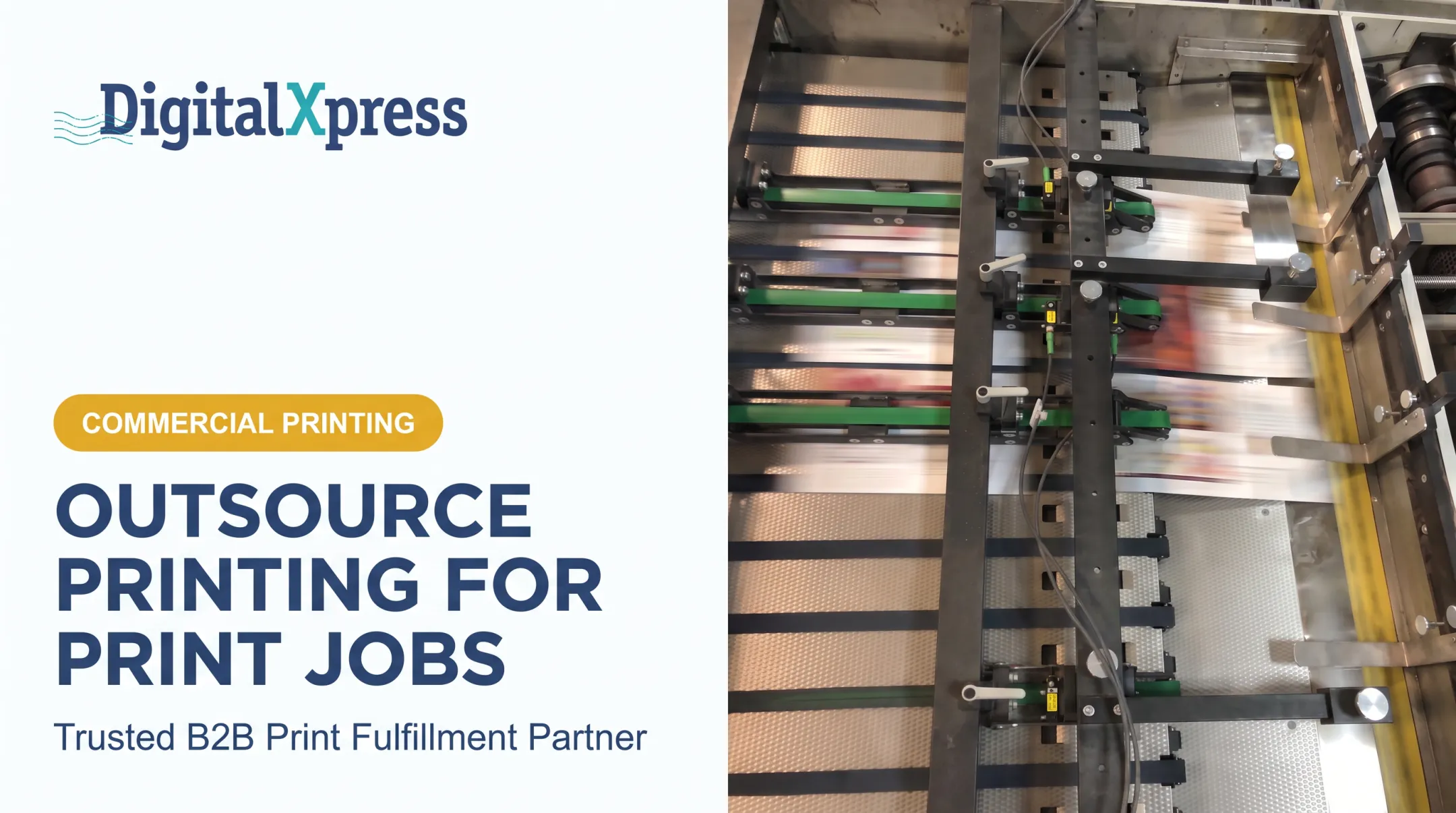
Digital production printers, such as HP Indigo presses, handle this without a separate plate for every version. Web presses like the HP T250 can run up to six miles of paper per hour for high-volume variable output on postcards, letters, and self-mailers.

For example, a nonprofit pulls donor history and adjusts the appeal amount, thank-you message, and impact story by giving level. A B2B manufacturer swaps product specs and case studies by industry on the same brochure shell. Same template, different content, one production run.
Proofing matters more here than in static printing. A strong proofing pass checks representative records and edge cases:
- Longest names in the file
- Missing fields and special characters
- Address formatting quirks
- Offer-code accuracy
We recommend proofs on every digital and offset job for this reason. One bad merge on 50,000 pieces is a very expensive typo.
Benefits of Variable Data Printing for Marketing
Relevance Changes Behavior
Personalization works because it connects content to a recipient's actual relationship with the organization. A returning customer sees a loyalty offer. A first-time prospect sees an introductory one. Same mail piece, different reason to open it.
Segmentation Replaces Guesswork
Instead of mailing one message to an entire list, VDP lets marketers build versions by:
- Customer lifecycle stage
- Industry or vertical
- Product interest
- Donor status or membership level
- Geography
Built for Measurement
Pairing personalized offers with QR codes, unique URLs, or promo codes turns a printed piece into a trackable one. You can see who scanned, who redeemed, and who didn't respond at all — data that a blanket mailing simply can't give you.
Direct mail already performs well as a channel. USPS-commissioned research found direct mail generated roughly a 7% response rate compared to about 3% for digital channels among the marketers surveyed.
Layering targeted, personalized content onto that channel typically improves response further, even without a single universal VDP benchmark.

Operational Upside
Beyond response, VDP lets teams:
- Produce multiple audience versions in one workflow instead of separate print runs
- Update offers or messaging without rebuilding the whole campaign
- Support short-run or on-demand production for smaller segments
Where It Falls Short
Personalization isn't magic. It can't fix:
- Poor or outdated data
- An offer nobody wants
- Weak creative
- Unclear consent practices
- A campaign objective nobody can actually measure
Put a first name on a bad offer and it's still a bad offer.
Marketing Applications for Variable Data Printing
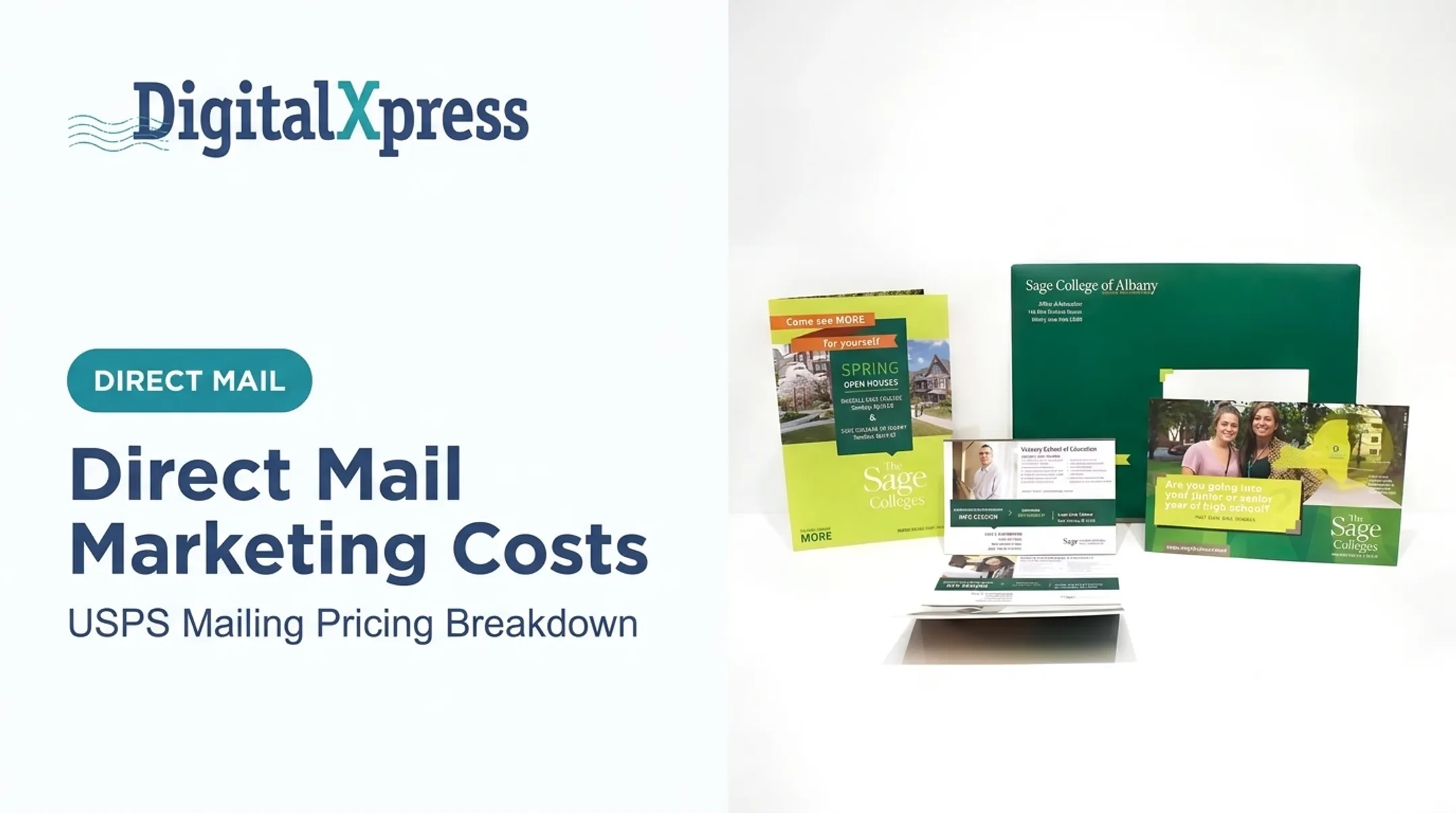
Direct mail is the most familiar use case: personalized names, offers, imagery, URLs, and QR codes designed to feel less like a blast and more like a conversation.
We handle direct-mail production at real scale, printing and mailing roughly 700,000 postcards weekly. One recent campaign totaled 739,665 pieces sent across California and Nevada.
B2B and account-based marketing teams use VDP for industry-specific brochures, territory-based collateral, product recommendations, and sales leave-behinds tailored to a specific account or vertical.
Nonprofits and membership organizations rely on it for:
- Appeals segmented by giving history
- Renewal notices and donor acknowledgments
- Event invitations
- Messages based on engagement level
Retail, hospitality, and service businesses use targeted promotions, loyalty mailers, appointment reminders, regional offers, and win-back campaigns.
One example from our work: a promotional postcard for Stuyvesant Plaza with a scannable QR code that sent recipients to a specific landing page.
Event and onboarding materials can include attendee names, session selections, location-specific instructions, or personalized welcome packets.
Know the Line on Sensitive Data
Across every channel above, data sensitivity sets a hard boundary. Not every field belongs on a personalized mailer, and healthcare and financial communications carry real regulatory weight.
Under HIPAA, covered entities generally need written authorization before using protected health information for marketing, with narrow exceptions for treatment, case management, or the entity's own services.
Financial institutions face similar disclosure obligations under the Gramm-Leach-Bliley Act. The rule of thumb: personalize based on relationship and preference, not diagnosis or account balance.
Planning and Managing a Variable Data Print Campaign
Start With the Action, Not the Design
Before anyone opens InDesign, define what the recipient should actually do: scan a QR code, redeem an offer, renew a membership, schedule an appointment, or call a rep. Every variable field should serve that action.
Choose Variables That Earn Their Place
Not every data point improves relevance. A recipient's first name helps. A decorative "just for you, Jane!" headline stapled onto irrelevant content doesn't. Ask which fields genuinely change the message, not just the greeting.
Data-Readiness Checklist
Before data goes anywhere near production, confirm:
- Clean exports from the source system with consistent field names
- Standardized formatting across name, address, and offer fields
- Duplicates removed and missing values flagged
- Suppression lists and consent status applied
- Address hygiene completed
On that last point: USPS requires mailers using NCOALink-licensed providers to work from address data that's refreshed against 18 months of change-of-address records. Mailing lists generally need reconciliation within 95 days of an electronic postage statement to avoid surcharges.

Protect the Data Through Every Stage
File transfer, production, storage, and disposal all need access controls and secure handling — not just a promise, but a documented process. We operate under SOC 2® compliance, with independent audits of access controls and ongoing monitoring.
Proof, Then Pilot, Then Scale
- Build test records covering every segment plus edge cases (long names, missing fields, unusual characters)
- Route proofs for approval before authorizing the full run
- Connect print to digital through personalized landing pages, trackable URLs, or offer codes
- Define your reporting plan before production starts, not after
- Run a controlled pilot tracking delivery, response, conversion, and cost per response before scaling up
Choosing a Variable Data Printing Services Partner
Print quality is table stakes. The harder questions are about data handling, execution, and what happens when something needs fixing at 4pm before a mail date.
Buyer's Checklist
Ask any prospective partner about:
- Digital production capacity and variable-data file handling
- Creative/prepress support for templates, placeholders, and version control across segments
- Proofing procedures, edge-case testing, quality controls, and reprint policy
- Finishing, mailing, fulfillment, and delivery coordination
- How sensitive data is protected, transferred, and deleted
- Address processing, postal requirements, and post-drop campaign reporting
An end-to-end partner cuts handoffs between your marketing team, designer, printer, mail house, and fulfillment vendor. Fewer handoffs mean fewer places for a merge error or missed deadline to slip through—which is why integration belongs on the shortlist alongside press quality.
Where We Fit
At Digital XPress, we've run in-house print and mail operations for more than 35 years, growing from a print brokerage founded in 1989 into a full-service Albany, NY provider.
Production, creative, and mailing sit under one roof—and that structure matters for VDP:
- In-house creative services for template building and pre-flighting submitted files
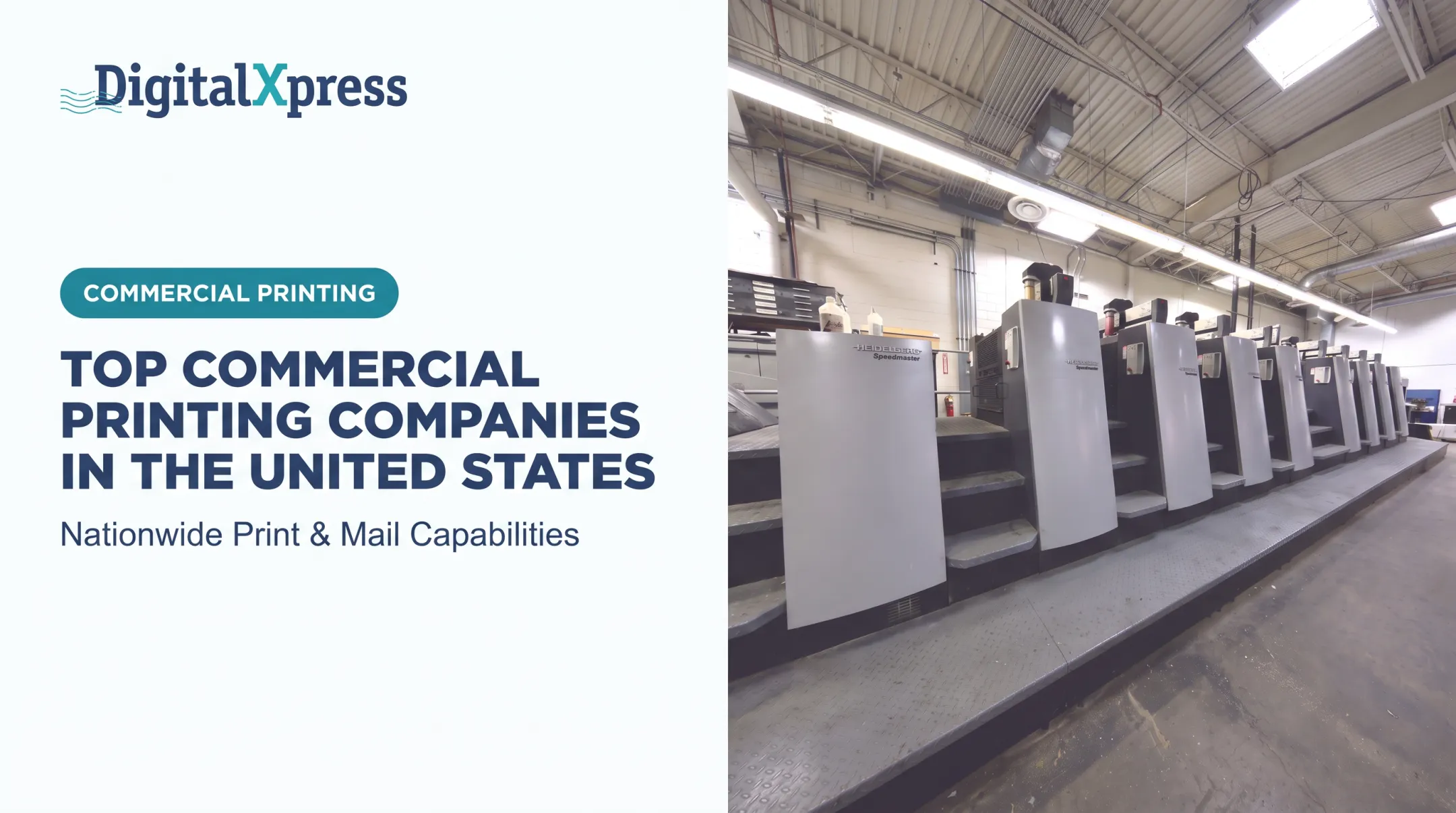
- HP Indigo digital presses and HP T250 web presses for personalization from invitations to high-volume postcards and self-mailers
- SOC 2®-compliant systems that protect recipient data through production
- FSC® certification for sustainable paper options when clients need them
- On-site USPS Postal Clerk, plus in-house match mailing, inkjet addressing, and inserting
Marketers can use us as one partner from campaign planning and creative through personalized printing and mailing. Scope, quantity, and turnaround still get set against your requirements—not generic assumptions.
If you're weighing a VDP campaign, start with a conversation about audience, data, format, quantity, mailing goals, and how you'll measure results. We have that conversation before a single file gets built.
Frequently Asked Questions
What is variable data printing?
Variable data printing is a digital printing process that changes selected content, such as text, images, or offers, from one printed piece to the next using structured recipient or audience data, while the overall design template stays consistent.
What is an example of variable data?
Common examples include a recipient's name, a personalized offer amount, a product image matched to interest, a regional message, a QR code, donation history, or event registration details.
What types of printers are used for variable data printing?
VDP typically runs on digital production printers, including toner-based systems like HP Indigo presses or inkjet web presses like the HP T250. The right equipment depends on format, substrate, quality needs, speed, and finishing requirements.
How much does variable data printing cost?
Cost depends on quantity, format, paper, color, the number and complexity of variable elements, finishing, data preparation, and mailing. Because these variables shift project to project, it's best to request a specific estimate.
Is variable data printing secure for customer information?
Security depends on the provider's access controls, file-transfer methods, retention policies, and compliance practices. Ask prospective partners directly how sensitive data is protected during transfer, production, and storage.
When should a business use variable data printing?
VDP makes sense when personalization genuinely improves relevance or response, and when the organization has clean, permissioned data along with a measurable campaign objective. Without those two things, personalization adds cost without adding value.