But not every letter should sound the same. A buyer love letter, a prospecting letter to an expired listing, and a thank-you note to a past client all serve different people with different goals. Sending the same script to all three usually falls flat.
This guide covers customizable templates, a simple writing framework, the compliance checks agents skip too often, and a print-and-mail workflow that gets letters into mailboxes correctly the first time.
Key Takeaways
- Match each letter to one recipient and one specific goal instead of a one-size-fits-all script.
- Lead with something useful to the reader, then close with a single, low-pressure call to action.
- Confirm every property fact, statistic, and claim before it goes in the mail.
- Screen buyer love letters and prospecting pieces for Fair Housing, privacy, and advertising rules.
Choose the Right Realtor Letter for Your Audience and Goal
Before drafting anything, figure out who's reading the letter and what you want them to do next. The National Association of REALTORS® groups business letters by function: referral requests, price-adjustment notices, and lead-generation pieces for prospects, investors, and open-house visitors are all treated as prospecting tools, not separate legal categories.
The letter's job changes the tone entirely:
- Introduction letters meet someone new: a neighbor, a sphere-of-influence contact, or a resident in a new farm area.
- Prospecting letters target a specific opportunity, such as an expired listing or a FSBO seller.
- Relationship letters maintain contact with past clients or referral sources.
- Transaction letters support an active buyer or seller through a specific step.
A Simple Selection Framework
Run through four questions before you write a word:
- Who is the recipient? A dormant past client needs a different opener than a brand-new lead.
- What's the next step? A phone call, a reply email, or event attendance are all different asks.
- What proof or value fits? A market update works for a seller prospect; a preparation checklist works for a first-time buyer.
- When should it land? Timing after a closing, a rate change, or a neighborhood sale matters more than the words themselves.
Also decide the delivery format early:
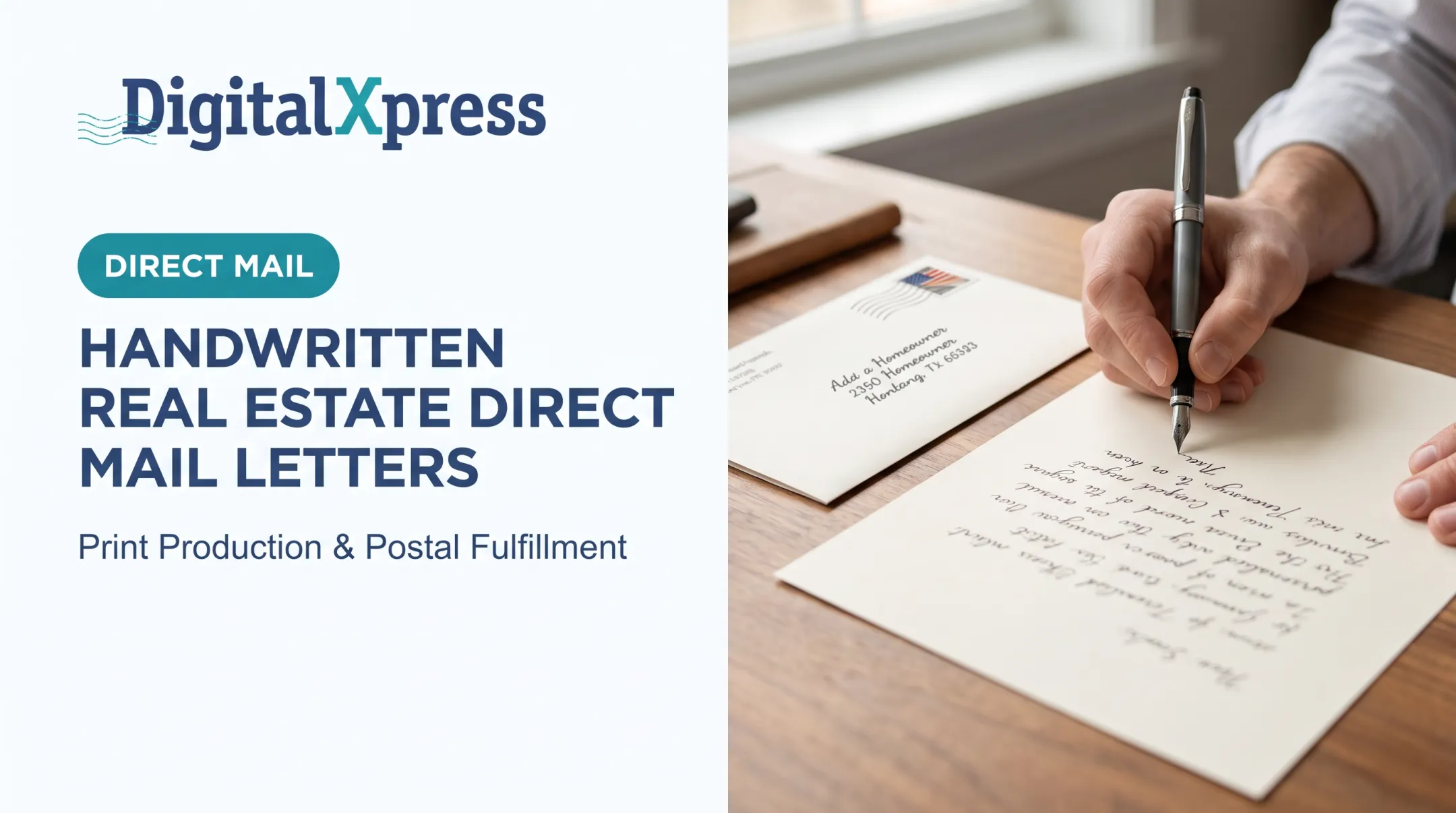
- Handwritten notes signal a personal touch for past clients
- Digitally printed letters with variable data fit a 500-home farm mailing
- Postcards suit quick, visual announcements
- Full letters suit anything that needs more explanation
Whatever you choose, plan a follow-up email or call to reinforce the message. Most letters work better as one step in a sequence, not a single shot.
Realtor Letter Templates for Common Real Estate Situations
Every template below should feel personal, not mass-produced. Use bracketed placeholders like [First Name], [Property Address], [Market Update], [Phone], and [Email] so each version stays specific to the recipient.
Introduction and Neighborhood Letter
Use this to introduce yourself to a farm area, a new service zone, or a sphere-of-influence contact. Keep it low-pressure:
Hi [First Name], I wanted to introduce myself as your local agent in [Neighborhood]. I've been tracking recent sales and market shifts here, and I'm happy to answer questions anytime, with no obligation. If you're curious what's happening with home values nearby, just reply or call [Phone].
Seller Prospecting Letter
Adapt the structure for just-listed, just-sold, expired, FSBO, or a general CMA offer. Use only verified property details. A "sold" claim only applies if you were the listing or cooperating broker:
- Just-listed/just-sold: Reference the specific address, note the outcome, and offer a free home-value estimate for their property.
- Expired listing: Acknowledge the situation without criticizing the previous agent, and offer a fresh marketing approach.
- FSBO: Focus on a specific service, such as contract review or pricing strategy, rather than a generic pitch.
Buyer and Inventory Letter
"Golden letters" or off-market inquiries ask homeowners if they'd consider selling to a specific buyer. Be transparent about whether a real buyer relationship exists:
My clients, [Buyer Description], are searching for a home in [Neighborhood] and haven't found the right fit yet. If you've considered selling, even informally, I'd welcome a conversation about whether your home could be a match.
Never fabricate buyer interest to generate leads. This template only works when the demand is real.
Open House, Referral, and Past-Client Letter
Tie each message to a specific event or prior interaction:
- Open house invite: Mention the address, date, and one distinguishing feature of the home.
- Referral request: Reference the closing date and thank them specifically for their business.
- Reconnection letter: Note the last time you worked together and offer a relevant update, such as a market shift in their area.
Template Building Blocks for Every Sample
Every letter, regardless of type, needs these components:
- Greeting and personalization field
- Reason for writing
- Value focused on the recipient, not on the agent
- Proof or context (verified only)
- One clear call to action
- Contact information
- Optional follow-up timeframe
How to Write a Realtor Letter That Feels Personal and Professional
Skip the biography. Open with the recipient's situation instead: their property, their neighborhood, or their transaction stage. Credentials can come later, if at all.
Use a Structure Readers Can Scan Fast
A tight letter follows this order:
- Greeting with the recipient's name
- Purpose statement in one sentence
- Relevant value tied to their situation
- One credibility point
- Single call to action
- Professional sign-off
Make the Value Tangible
Vague claims like "best in the area" don't land. Offer something concrete instead:
- A market update specific to their street
- A free home-value conversation
- A buyer consultation
- An open-house invitation
- A move-in preparation checklist
Only use current sales figures, testimonials, or certifications when they're accurate, authorized, and relevant to this reader. Verify any market statistic before it goes to print. An outdated number undermines credibility fast.
Close With One Clear Next Step
Don't stack a phone number, a website link, an email address, and a QR code and hope one sticks. Choose the single easiest next step for that recipient. A text reply often outperforms a formal call request.
Before sending, review for:
- Correct spelling of names and addresses
- Accurate property details
- Required brokerage disclosures
- Working contact information
- A tone that sounds like a real person, not a script
Compliance and Risk Checks Before Sending Realtor Letters
This is the section agents skip and later regret. A few minutes of review here prevents real liability.
Fair Housing and Buyer Love Letters
Buyer love letters — personal appeals from buyers to sellers — carry real risk. NAR's 2023 guidance on buyer love letters warns that these letters can reveal protected characteristics like religion, family status, or national origin. Photos or videos add further exposure. A seller who selects an offer partly because of a buyer's personal story — even unconsciously — creates Fair Housing risk for everyone involved.
The safer approach: build buyer offers around objective terms — price, financing, contingencies, and timeline — instead of a personal narrative. Listing agents should set a clear policy on whether these letters are accepted at all, and document the objective reason behind any offer decision.

Truthful Advertising and Listing References
Every claim needs to hold up. Before referencing a sale, a listing, or a market statistic:
- Confirm you actually represented the listing or transaction before claiming a "sold" result.
- Disclose your brokerage name clearly on any letter advertising services or property.
- Never advertise a property you don't have authority to market.
- Avoid unsupported superlatives — "top producer" or "number one" claims need evidence behind them.
Privacy and Sensitive Information
A preapproval letter, per the CFPB, reflects a lender's tentative willingness to lend up to a certain amount — it's based on assumptions, not a guaranteed loan. Share only the document itself, and only through a secure, agreed-upon method. Never attach tax returns, bank statements, or full loan files to a prospecting or offer letter just to look more credible.
Mailing and Contact Requirements
Different channels carry different rules:
| Channel | Key Requirement |
|---|---|
| Postal mail | Follow USPS formatting and size standards; verify addresses before sending |
| Commercial email | Include a physical address, honest subject line, and working opt-out |
| Calls/texts | Confirm Do Not Call Registry status and document consent |
Check applicable federal, state, brokerage, and REALTOR® association rules before any campaign, and keep a record of approvals where required.
Print, Mail, and Follow Up on a Realtor Letter Campaign
Design should back the message. A handwritten-style note for a past client needs different paper and format than a 1,000-piece farm mailing. After that, a repeatable print, mail, and follow-up process gets each piece out the door and gives it a real chance at a reply.
Building a Repeatable Workflow
- Segment your list by recipient type and goal — don't mix past clients with cold prospects.
- Merge personalization fields so each letter reads as individually written, not templated.
- Proof a sample piece before the full run goes to print.
- Confirm postage and addresses against current USPS rates and formats.
- Send the campaign and record what went out, to whom, and when.
- Schedule a follow-up — a call or email a week or two later often converts better than the letter alone.
Variable data printing makes step two realistic at scale. It merges a print-ready design file with a spreadsheet and merge rules. Each letter in a 500-piece run can pull the right name, address, and market detail without manual editing.

Where We Fit
At Digital XPress, we support this kind of campaign with in-house print and mailing services in Albany, NY. Our direct mail production includes:
- Personalized printing with variable data capabilities
- Inkjet addressing and postage optimization
- An on-site USPS Postal Clerk who tracks current rates and incentives
- SOC 2®-compliant handling for sensitive recipient data
- FSC® Certified paper and printing options
Turnaround for a straightforward postcard or letter run is typically 5–7 business days from proof approval. Complex finishing takes longer, so confirm quantities, formats, and postal requirements with one of our mail specialists before you schedule the run.
Turn a Realtor Letter Template Into a Consistent Relationship Tool
Templates give you structure. They don't replace judgment. Letters that work share a few non-negotiables:
- Specific to one audience
- Accurate in every detail
- Genuinely useful
- Short enough to read in under a minute
- Clean from a compliance standpoint
Once a template clears that bar, roll it out in a controlled way:
- Pick one audience — past clients, an expired-listing list, or a farm neighborhood.
- Customize one template for that group.
- Review it against the Fair Housing, advertising, and privacy checks above.
- Send a small test batch before committing to a full campaign.
- Track responses and refine the next version based on what actually worked.
Frequently Asked Questions
Is it normal to send a REALTOR your pre-approval letter?
Yes, buyers commonly share pre-approval documentation through their agent or lender when making an offer. Share only the lender's document itself, and confirm a secure method for sending it rather than emailing sensitive financial details directly.
Do buyers still write letters to sellers?
Some buyers still consider personal letters to strengthen an offer, but agents should weigh Fair Housing, brokerage policy, and seller instructions first. Many listing agents now decline these letters entirely to reduce risk on both sides.
What not to say to a real estate agent?
Avoid inaccurate claims, confidential financial details, or references to protected characteristics like family status or national origin. Pressure tactics and statements that misrepresent a buyer's qualifications also create problems later in the transaction.
What is a prospecting email?
A prospecting email is targeted electronic outreach to a potential client or referral source, aimed at building rapport and opening a conversation. It differs from a mailed prospecting letter mainly by channel. Email needs opt-out compliance and a clear sender identity; mail follows separate postal and advertising standards.