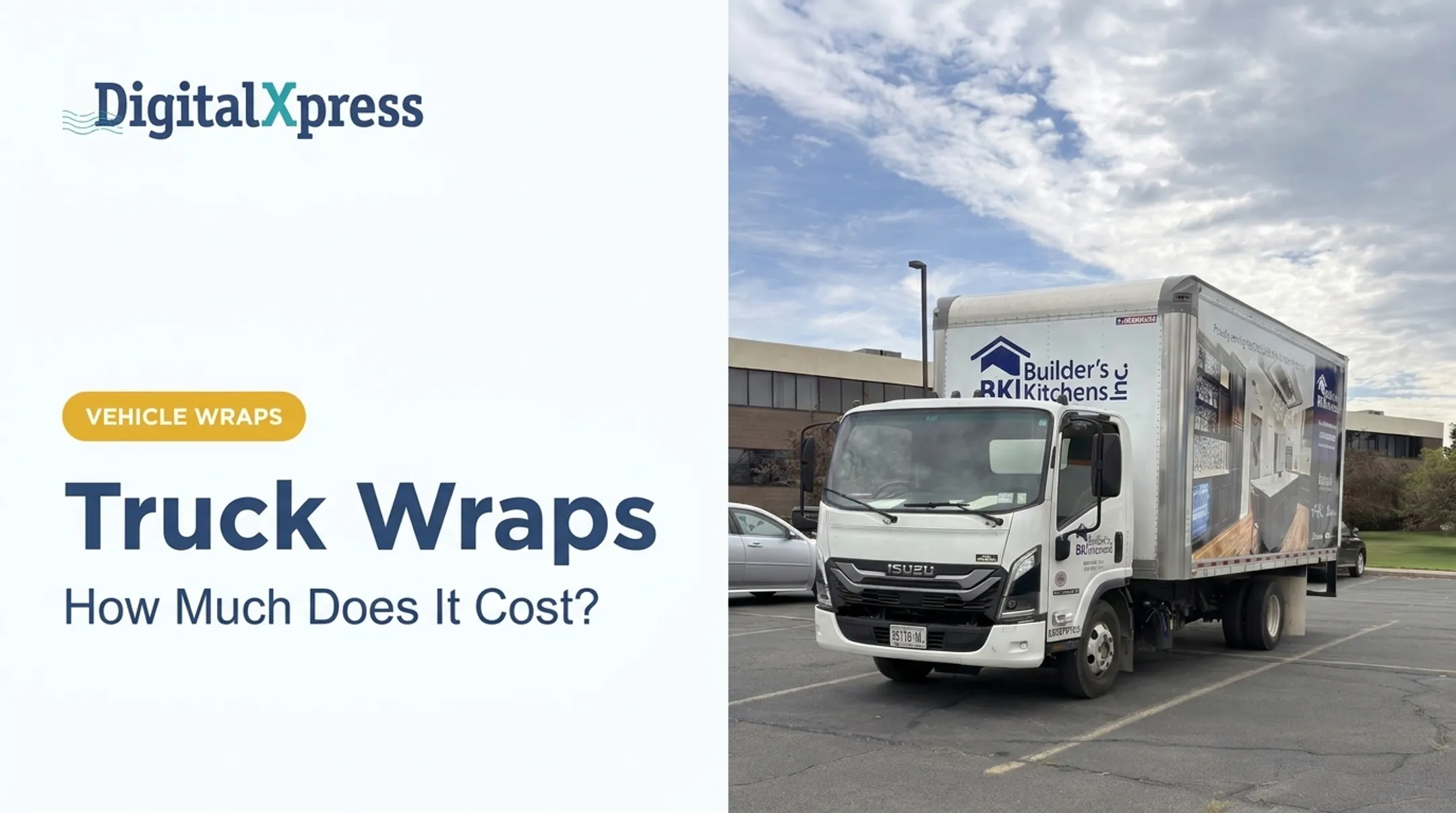
Truck wrap costs shift based on vehicle size, how much of the surface gets covered, material quality, design complexity, the condition of the paint underneath, and where you get it installed. A single pickup with basic lettering costs nothing like a full-coverage, custom-printed wrap on a fleet of service trucks.
This guide breaks down current U.S. pricing, the factors that push a quote up or down, and the questions worth asking before you sign off on any wrap job.
Key Takeaways
- Partial graphics and lettering typically run $1,100 to $2,600; full wraps often land between $3,000 and $7,500+
- Truck size, coverage level, vinyl quality, artwork complexity, and installer experience drive most of the price difference
- Full-size, heavy-duty, custom-printed, or multi-vehicle projects need bigger budgets than simple decals
- The lowest quote isn't automatically the best deal if it skips prep, laminate, or warranty coverage
How Much Does a Truck Wrap Cost? (Pricing Overview)
There's no single fixed price for a truck wrap. A reliable number depends on your vehicle's size and condition, how much coverage you want, the artwork involved, and where the installation happens.
Skipping this detail leads to real problems. Businesses underbudget, get blindsided by prep or removal charges that weren't in the original quote, or pick a material that can't handle their truck's actual use case.
Typical Cost Range
Here's a breakdown of what U.S. shops are currently charging, based on published 2025 pricing data:
| Tier | Price Range | What It Typically Covers |
|---|---|---|
| Entry-level / partial | $1,100 – $2,600 | Door logos, lettering, decals, bed-side or tailgate graphics |
| Mid-range / standard | $3,000 – $6,500 | Full color-change wrap or larger partial wrap on a pickup |
| High-end / advanced | $3,500 – $7,500+ | Custom-printed commercial graphics, premium film, heavy-duty trucks |
According to 2025 commercial wrap pricing data, pickup spot graphics and cut decals fall between $1,175 and $1,700, while a full pickup wrap runs $3,150 to $4,370. These figures generally exclude design fees, Confirm whether laminate, prep, and removal are included before you commit.
Most quotes leave out at least one of these:
- Artwork creation
- Printing and laminate
- Surface prep
- Removal of an old wrap
- Taxes or delivery
Ask for an itemized breakdown every time.
Entry-Level / Partial Wraps ($1,100 – $2,600)
What's typically included: Basic artwork, standard vinyl, limited coverage (a door panel, tailgate, or a row of lettering), and straightforward installation. Verify with your installer whether design work is bundled in or billed separately.
Best for: Owner-operators testing out branding, or trucks that already have a color that works with minimal graphics layered on top.
Mid-Range / Standard Wraps ($3,000 – $6,500)
What's typically included: Broader coverage, more material, professional installation, and often custom branding or a solid color-change film. Metro Restyling's 2025 pricing lists complete truck wraps, including installation and vinyl, at $3,000 to $6,500. Digitally printed graphics (logos, photos, gradients) typically cost more than solid-color vinyl.
Best for: A single branded service truck, contractor vehicle, or any business that wants stronger visibility on the road without a fleet-sized budget.
High-End / Advanced Wraps ($3,500 – $7,500+)
What's typically included: Premium cast vinyl, complex contours (think rounded cabs or box-truck corners), custom design, high-resolution printing, protective laminate, and extensive surface prep. Fleet-standard artwork that needs to look identical across multiple vehicles also lands here.

Best for: Heavy-duty trucks, high-visibility commercial branding, demanding environments (construction, delivery), and businesses that need a polished, repeatable look across a growing fleet.
Key Factors That Affect the Cost of a Truck Wrap
Wrap pricing isn't a simple per-square-foot calculation. It reflects technical, creative, and operational decisions specific to your truck.
Vehicle Type, Size, and Configuration
Mid-size pickups need less material than full-size trucks, heavy-duty models, or box trucks. Labor scales with size too. A bigger surface means more time spent smoothing vinyl around body lines, mirrors, and door handles.
Cab-and-chassis vehicles and box trucks often require quote-based pricing rather than a standard table rate, since their body styles vary so much.
Coverage Level and Wrap Type
Full wraps cover the entire vehicle. Partial wraps cover a specific portion while leaving the factory paint visible as part of the design. Spot graphics and lettering cover the least.
A solid color-change wrap uses one continuous film. A digitally printed commercial wrap adds logos, contact details, photos, or gradients, which requires more production time and typically costs more per square foot.
Vinyl Material, Finish, and Protective Laminate
Not all vinyl performs the same:
- Calendered film: shorter-term use; can shrink or lift on complex curves
- Cast vinyl: long-term wraps; holds better on contoured or riveted surfaces
- Overlaminate: UV, heat, and scratch protection over printed graphics
Laminate isn't optional if you want the wrap to look good past year two. Ask your installer for current material line items instead of relying on a flat per-square-foot assumption.
Design Complexity and Customization
Design time drives cost when any of these are in scope:
- Original artwork or concept development
- Template layout for your specific truck model
- Multiple revision rounds
- Precise color matching
Providing a vector logo, brand guidelines, and high-resolution artwork up front cuts avoidable design hours.
Surface Condition and Preparation
Vinyl needs a clean, dry, properly cured surface to adhere correctly. Rust, dents, peeling clear coat, or leftover adhesive from an old decal can all complicate both installation and future removal. A professional inspection before quoting catches issues that wrapping won't hide. Wraps are not a substitute for paint repair.
Installation, Location, and Project Scale
Installer skill, shop overhead, and regional labor rates all factor into the final number. Larger or more intricate vehicles push installation costs toward the higher end of any range.
For fleet projects, reused templates and consistent artwork across vehicles can create efficiencies, and providers sometimes offer volume pricing when multiple trucks are scheduled together. Ask your installer what volume pricing looks like for your schedule and truck count.

Total Cost Breakdown of a Truck Wrap
A wrap invoice usually covers more than just vinyl. Here's what typically shows up across the project lifecycle:
| Cost Component | Timing | What It Covers |
|---|---|---|
| Design and artwork | One-time (recurring if revised later) | Concept development, template layout, logo prep, revisions, proofing |
| Vinyl, printing, laminate | One-time, replaced at end of life | Material series, finish, laminate type, warranty terms |
| Surface prep and installation | One-time, more for damaged surfaces | Cleaning, old graphic removal, trim disassembly, application, curing |
| Maintenance and repairs | Recurring | Wrap-safe washing, prompt edge repair, panel touch-ups |
| Removal and paint correction | Periodic | Full removal, adhesive cleanup, possible paint correction |
At Digital XPress, our vehicle wrap projects move through concept and design, printing, and final installation as a coordinated process rather than separate handoffs. Our in-house creative team pre-flights submitted design files and can build original logos or wrap artwork when a business doesn't already have print-ready files.
Plan for the full lifecycle, not just install day. Professional wrap removal typically runs $500 to $1,500 for a standard vehicle, with large trucks or older, sun-damaged wraps sometimes exceeding $2,000.
Removal price depends on:
- Film age and time on the vehicle
- Sun exposure and heat-damaged adhesive
- Quality of the original installation
Low-Cost vs High-Cost Truck Wraps — What's the Difference?
Price differences usually come down to material quality, prep work, installer skill, and expected service life — not just how the wrap looks on day one.
| Factor | Lower-Cost Wrap | Higher-Cost Wrap |
|---|---|---|
| Performance | Limited coverage, simpler artwork, fewer contours addressed | Fuller coverage, premium conformable film, professional print and lamination |
| Durability | May shorten under harsh cleaning, outdoor storage, or delayed repairs | Premium materials plus proper installation and maintenance support longer life |
| Precision / quality | Fewer design revisions, possible visible seams | Consistent color, aligned logos, clean edge finishing, QC inspection |
| Maintenance | Still needs regular cleaning and edge care | Same maintenance needs, but often better warranty and repair support |
| Long-term value | Fine for short campaigns or limited coverage | Better fit for daily commercial use, multi-year branding, complex bodies |
A budget wrap isn't automatically a bad wrap. It makes sense for a short-term campaign or a truck with a limited planned service period. Spending more makes sense when the truck runs daily routes, needs to look consistent across a growing fleet, or has to survive job-site conditions for years.
How to Estimate the Right Budget for a Truck Wrap and Avoid Surprise Costs
The right budget matches your truck's actual purpose and expected lifespan, not the lowest number on a quote sheet.
Work through these before comparing bids:
- Intended use and workload: Daily mileage, job-site exposure, and whether this is a personal vehicle or a revenue-generating business asset all matter.
- Coverage and messaging priorities: Decide if you need full branding or just a readable logo, phone number, and web address on key sightlines.
- Quality and compliance requirements: Confirm vinyl type, laminate, color accuracy, and any brand consistency standards before quotes come in.
- Vehicle condition and infrastructure: Factor in inspection, repairs, old graphic removal, and truck downtime during installation.
- Lifecycle costs: Budget for maintenance, occasional panel repairs, and eventual removal so the upfront quote reflects the full ownership period.

Before approving anything, request an itemized quote covering design, revisions, material brand and series, printing, laminate, prep, installation, warranty, taxes, and removal or pickup.
Businesses managing recurring print, creative, or fleet-branding work across multiple vehicles can ask us about our in-house creative and large format production. The same team handles concept development, printing, and installation, so artwork stays consistent as trucks are added or rebranded.
What Most People Miss on Truck Wrap Cost
- Focusing only on upfront price: A cheap quote may exclude design, laminate, prep, removal, or warranty support entirely.
- Ignoring downtime and operational costs: Fleet owners need to account for vehicle availability and lost use during installation, not just the invoice.
- Over-specifying unneeded features: Specialty finishes or full coverage don't always improve results when the goal is simple brand recognition.
- Choosing the cheapest bid without checking reliability: Review installer experience, material documentation, and workmanship examples before signing.
Conclusion
Truck wrap cost depends on a handful of project choices:
- Vehicle size and how much surface you cover
- Materials, design, prep, and installation quality
- How long you plan to keep the wrap on the road
There's no shortcut around getting specific about your truck and your goals. An itemized quote paired with a realistic maintenance and removal plan beats chasing the lowest advertised starting price.
Judge the investment by visibility, durability, workmanship, and long-term value. The first line of the estimate is only one piece of that decision.
Frequently Asked Questions
How much does it cost to wrap a truck?
Partial truck graphics typically run $1,100 to $2,600, and full wraps usually fall between $3,000 and $7,500 or more. Final cost depends on truck size, coverage, material, design complexity, prep, and installation.
How long do truck wraps last?
Most truck wraps last 3 to 8+ years, depending on film type, sun exposure, storage, cleaning habits, and install quality. A garaged truck cleaned regularly will outlast one parked outdoors year-round.
Is it cheaper to wrap a truck or paint it?
A vinyl wrap usually costs less upfront than a comparable custom paint job and is easier to reverse or update. Paint can last longer with less upkeep; wraps win on design flexibility and add a layer of paint protection.
Which is better for a truck, PPF or a vinyl wrap?
PPF (paint protection film) shields paint from chips and contaminants. Vinyl wrap is the better choice for color changes, branding, and graphics—pick PPF for protection, vinyl for visibility.
Can I wash a wrapped truck, and is pressure washing safe?
Hand washing with mild soap is safest. If you pressure wash, stay below 1,200 psi, keep the nozzle well back from edges and seams, and follow the film manufacturer’s care instructions.