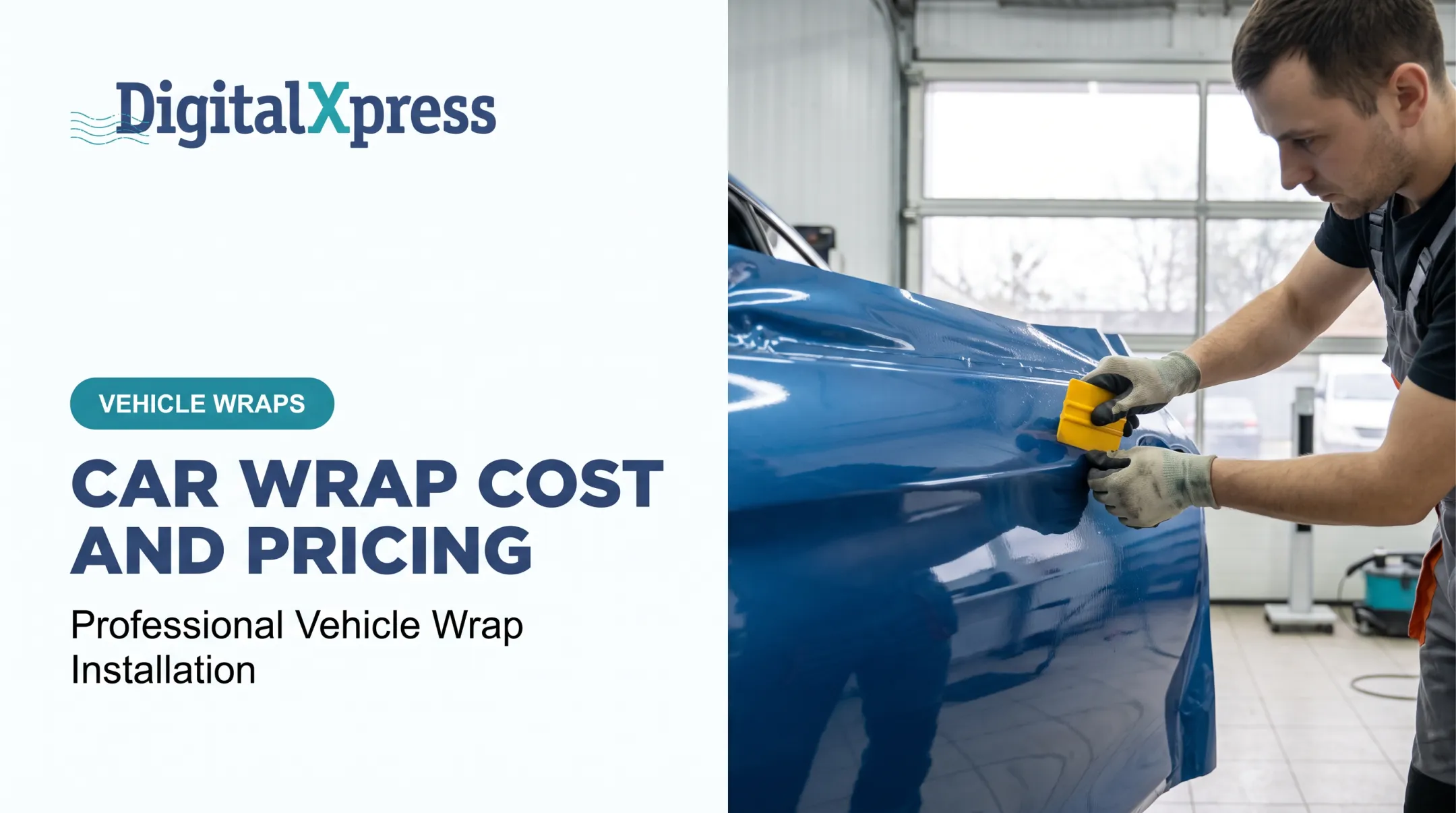
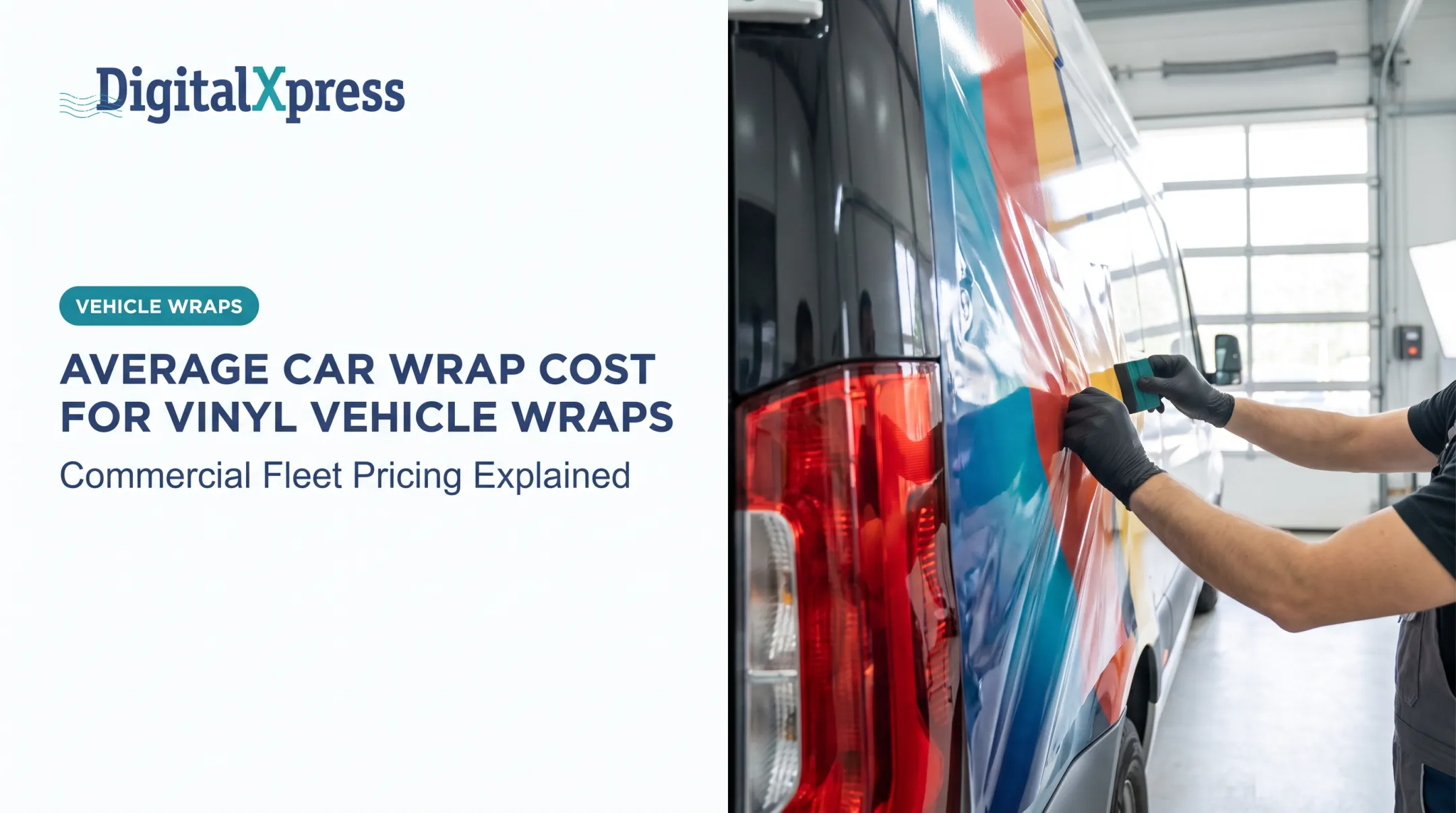
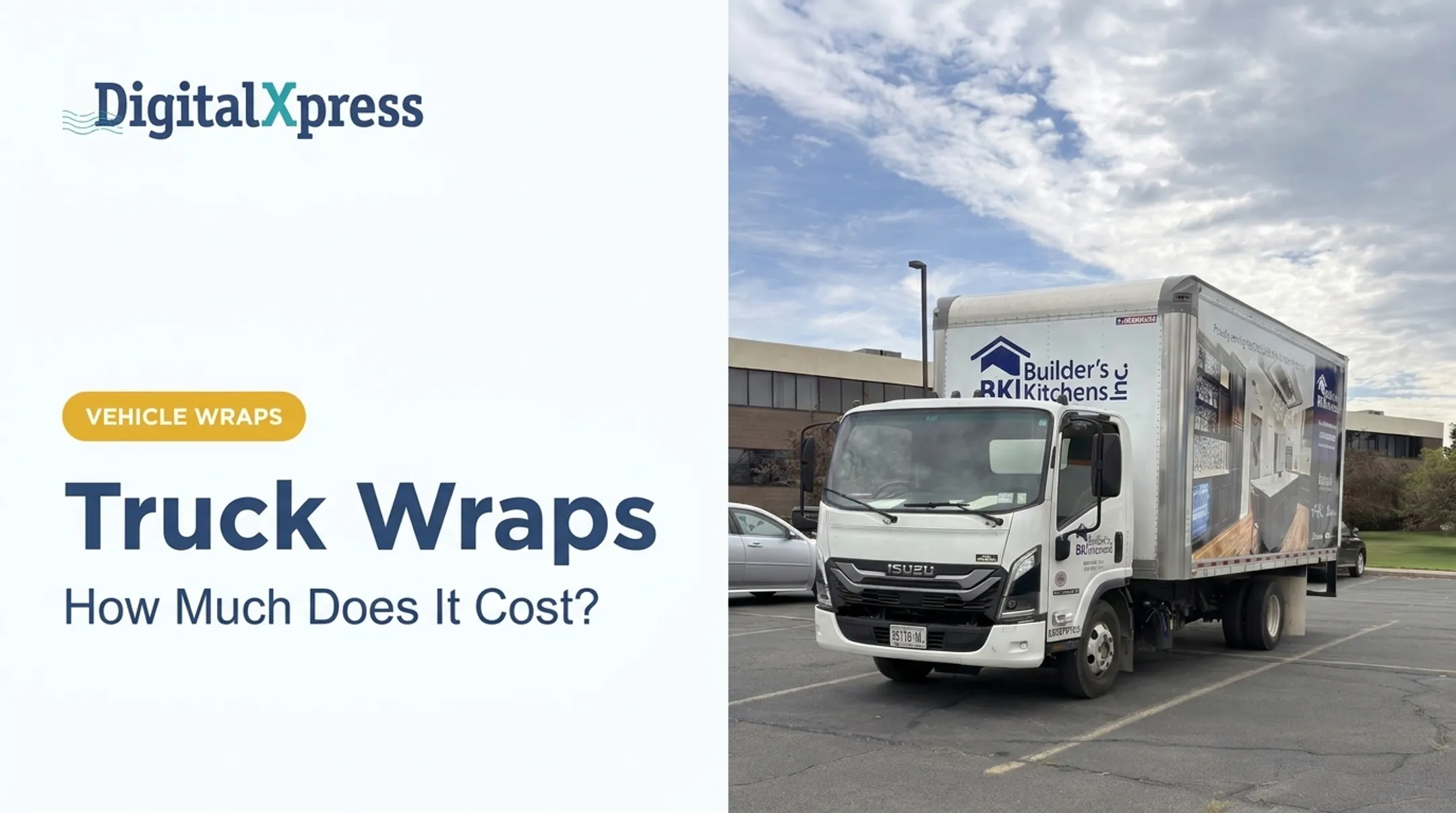
Professional full-wrap pricing across the US in 2026 ranges widely. Entry-level jobs start around $1,500, while premium branded or specialty-finish wraps can top $10,000 for larger or more complex vehicles, according to Wrapmate's 2026 pricing guide. That's a big spread, so this guide breaks it into real numbers by vehicle type, explains what drives your quote up or down, and walks through how to build a realistic budget before you call an installer.
Key Takeaways
- Standard full wraps typically cost $1,500–$5,000; custom fleet wraps run $3,500–$7,500.
- Vehicle size, body shape, film quality, and design complexity drive most of the price.
- Budget less for compact cars and sedans; plan more for SUVs, vans, and trucks with body kits.
- Premium cast film and experienced installers lower the risk of early lifting, bubbling, or a redo.
How Much Does a Full Vehicle Wrap Cost in 2026?
There's no fixed sticker price for a full wrap. Installers quote based on your specific vehicle and the scope you request.
A "full wrap" typically means coverage of the main exterior painted panels, but roofs, door jambs, mirrors, trim, and bumpers aren't always included by default. Always confirm what "full" means with your installer before you compare quotes.
Three Current Pricing Bands
Entry-level wraps cover smaller vehicles with standard gloss or matte cast vinyl and a simple design, typically $1,500-$2,500.
Mid-range wraps cover most sedans, coupes, and compact crossovers with quality film and moderate design work.
J.D. Power reports standard full-car wraps at $2,000-$4,000 in 2024. That range still holds in 2026 installer quotes; shops like Wichita Wrap Co. cite $2,500-$4,000 for a standard car.
High-end wraps use premium films, custom printed graphics, chrome or carbon-fiber finishes, or larger and more contoured vehicles. J.D. Power places specialty finishes at $6,000-$8,000, with luxury vehicles sometimes exceeding $10,000.
Pricing by Vehicle Category
| Vehicle Type | Typical Full-Wrap Cost |
|---|---|
| Compact car/coupe | $2,000 |
| Family sedan | $3,000 |
| Compact crossover | $3,500 |
| Full-size SUV | $4,000 |
| Pickup truck | $3,600 |
| Minivan | $3,600 |
| Luxury sports car | $5,000+ |
| Work van/fleet vehicle | $3,500-$6,000 |

Source: J.D. Power (2024), Wichita Wrap Co. (2026)
What About a 1500 Truck?
Full-size 1500 pickups sit in a wide range because cab style, bed length, and tailgate coverage all change the material needed.
According to Metro Restyling, a Chevy Silverado 1500 runs $3,500-$5,200, while the Ram 1500 and GMC Sierra 1500 land at $3,800-$5,500. Complete truck wraps typically range $3,000-$6,500, including vinyl and installation.
Adding a lift kit, running boards, or a bed cover means more cutting and wrapping around obstacles, which adds labor hours regardless of the base vehicle price.
What's Usually Included (and What Isn't)
Most advertised prices cover vinyl, basic surface prep, installation, and post-heating. They typically exclude:
- Custom artwork or logo vectorization
- Paint repair or correction
- Trim and badge removal
- Door jamb wrapping
- Old wrap removal
- Sales tax, storage, or mobile installation fees
Key Factors That Affect Full Vehicle Wrap Cost
A wrap quote reflects material usage and skilled labor. It's never just "vinyl rolls times square footage."
Vehicle Size, Surface Area, and Body Shape
Bigger vehicles need more film and more installation time, plain and simple. A compact sedan wraps faster than a full-size SUV or cargo van. Beyond raw size, body complexity matters:
- Deep curves and sharp body lines slow down application
- Recessed door handles and separate panels multiply seams
- Spoilers, roof rails, and running boards add cutting time
- Aftermarket body kits increase the risk of lifting at odd edges
Film Type, Finish, and Quality
Standard gloss or matte cast vinyl sits at the affordable end. Metallic, satin, color-shifting, chrome, and textured films cost more in both material and labor, since specialty finishes are less forgiving during installation.
3M's 2080 series, a widely used cast film line, covers solid colors through color-flip and textured finishes. Film choice directly affects durability, warranty coverage, and how the wrap ages in different climates.
Design and Customization
A solid color change is the simplest (and cheapest) option. Printed branding, photographic imagery, gradients, and precision logo placement all require more design and print production time. Wrapmate lists standard design work at around $250, rising to $400 when a vector logo needs to be built from scratch.
Commercial and fleet wraps often need:
- Brand-color matching against your existing materials
- Proofing rounds before print
- Print production and lamination
- Planning for replacement panels if a vehicle gets damaged later
Vehicle Condition and Preparation
Wrap film doesn't hide damage; it often highlights it. Peeling paint, rust, dents, and contamination can show through the vinyl or cause adhesion failure. Before quoting, most installers check for:
- Clean, contamination-free paint
- No active rust or bubbling clear coat
- Recently repaired panels fully cured
- Removable badges and trim identified in advance
Installer Skill, Location, and Project Logistics
Technician experience, shop overhead, and regional labor rates all affect pricing. A climate-controlled bay, faster turnaround, or mobile installation typically costs more than a basic drop-off appointment.
For fleets, logistics add further cost drivers:
- Vehicle downtime during installation
- Scheduling multiple trucks in one window
- Keeping install standards consistent as the fleet grows
Full Vehicle Wrap Cost Breakdown
Think of your quote as a project scope, not a single material price. Ask for an itemized estimate so you know exactly what you're paying for.
Initial Design and Artwork
Usually one-time, with possible charges for future revisions. This covers concept development, vehicle template layout, logo placement, and prepping print-ready files. If you're supplying your own artwork, ask whether it needs to be preflighted, since files built in tools like Canva often aren't print-ready without extra adjustment.
Vinyl, Printing, and Lamination
One-time per wrap, with replacement costs down the road if you rebrand. Film brand, printed versus solid-color vinyl, and overlaminate requirements all affect the total. Printed graphics need adequate curing time, at least 24 hours before lamination to avoid adhesion problems.
Surface Preparation and Disassembly
One-time for installation, with added charges if repairs or heavy disassembly are needed. This includes cleaning, contaminant removal, and pulling off mirrors, handles, or trim pieces for a clean wrap line. Body repairs themselves are usually a separate line item.
Installation and Finishing
One-time. Covers panel application, seam placement, edge wrapping, and post-heating for a durable finish. Flat panels like doors and hoods install faster than bumpers, mirrors, and recessed handles, which explains why two vehicles of similar size can still get different labor quotes.
Removal, Repairs, and Future Replacement
Periodic or condition-dependent. Removal isn't always bundled into your original quote. J.D. Power notes removal typically costs $500-$600 when a wrap is still in good shape, but can exceed $2,500 if the film has baked onto the paint over time. Fleet owners especially should budget for eventual removal.

Low-Cost vs. High-Cost Full Vehicle Wraps
| Factor | Lower-Cost Option | Higher-Cost Option |
|---|---|---|
| Film quality | Standard vinyl | Premium cast film |
| Design | Simple color change | Custom printed graphics |
| Edge finishing | Basic seams | Precision wrapping |
| Installer experience | Entry-level | Established, warranty-backed |
| Expected lifespan | Shorter | Longer, better protected |
The cheapest quote may skip prep work, premium film, or removal coverage entirely. Judge a higher quote by what's documented, not just the number on the page.
How to Estimate the Right Wrap Budget
Start with your goal. Is this a color change, a paint-preservation wrap, a one-off personal design, or a branded fleet rollout? Your answer shapes everything else.
Build a quote brief with:
- Vehicle year, make, and model, plus photos
- Current paint condition
- Desired coverage (full vs. partial)
- Finish and design files (or need for design help)
- Trim and accessory details
- Deadline and location
- Whether an existing wrap needs removal first
Get itemized quotes from a few installers. Compare:
- Film brand and coverage definitions
- Design, proofing, prep, and disassembly fees
- Warranty terms and turnaround
- Travel or storage charges
What Most People Miss
Focusing only on the upfront number is the most common budgeting mistake. Paint repairs, difficult trim sections, wrap removal, and design revisions can all show up as surprise add-ons later.
Before choosing the cheapest bid, check the installer's experience, film suitability for your vehicle, edge-finishing quality, and reviews from similar jobs.
Fleet operators can trim long-term costs by standardizing artwork templates, documenting exact film specifications, and scheduling multiple vehicles together to reduce per-vehicle downtime.
This is where a single production partner pays off. At Digital XPress, we manage vehicle wrap projects from concept and design through printing and professional installation, with in-house large format production under one roof.
For fleet graphics, that design-to-install continuity means fewer handoffs between designers, print shops, and installers. If you're outside the Albany, NY area, confirm whether full vehicle-wrap installation is available for your location before assuming coverage.
Conclusion
A full vehicle wrap's 2026 cost comes down to a handful of variables:
- Vehicle size and condition
- Film and finish quality
- Design complexity
- Prep work
- Installer skill
Confirm those details before you commit. There is no reliable shortcut around them.
The right budget balances appearance, durability, and workmanship—not just the lowest number on a page. Request a detailed quote based on your actual vehicle rather than a generic online estimate. That step prevents most of the scope surprises that inflate wrap projects after the fact.
We build vehicle and fleet wrap quotes from your real vehicle specs, film choice, and design scope so the number you approve matches the job you get.
Frequently Asked Questions
How much does it cost to wrap a whole car?
Professional full car wraps in the US typically run $2,000-$4,000 for standard vehicles, with entry-level jobs starting around $1,500 and premium finishes reaching $8,000 or more. Your final price depends on vehicle size, film choice, design complexity, and paint condition.
How much does it cost to get a 1500 truck wrapped?
Full-size 1500 trucks generally cost $3,000-$6,500, with most jobs landing around $3,500-$5,500. Cab configuration, bed length, tailgate coverage, and accessories all affect the final quote.
How long do full body car wraps last?
Quality cast films like 3M's 2080 series are rated for up to 8 years on vertical surfaces and 3 years on horizontal ones. Real-world life still depends on climate, care, and install quality, so ask your installer to separate warranty terms from expected durability.
Is it cheaper to paint or wrap a car?
It depends on your vehicle's paint condition and goals. Wraps generally cost less upfront than a full-quality paint job and preserve the factory finish underneath, but paint offers permanence without future removal costs.
Which is better, PPF or wrap?
Vinyl wrap is built for appearance changes and branding; paint protection film (PPF) is built to guard against rock chips, road debris, and scratches. The better choice depends on whether you want a new look or better paint protection, and some vehicles use both.
Can I vinyl wrap on plastic trim?
Smooth, cleaned exterior plastic can sometimes accept vinyl. Makers like Avery Dennison advise against rubber trim, window molding, or vents, and textured or heat-exposed plastic often needs an installer check first.